What Sandy and Mixed Soils Mean for Line Performance
Geneva sits in an area where soil composition varies from parcel to parcel. Some properties have sandy loam that drains quickly, and others contain clay pockets that slow percolation. The type of soil under your yard determines how long drain field lines last and what replacement method works best.
Sandy soils move water fast, and they also move solids and biomat buildup deeper into the absorption zone. Eventually, this clogs the soil. Replacement in sandy areas might require deeper excavation to remove contaminated material or installation of a layer of gravel that filters effluent before it reaches native soil.
Clay-heavy soils have the opposite problem. Water sits longer in the trench, which accelerates biomat growth on the line surfaces and reduces the effective absorption area. If your property has mixed soils, the installer needs to account for drainage rates and saturation thresholds when laying new lines. Percolation tests before a drain field line installation in Geneva can confirm whether the existing soil can still handle wastewater or if amendments like sand fill are required.
Tracing Drain Field Lines Across Wide Properties
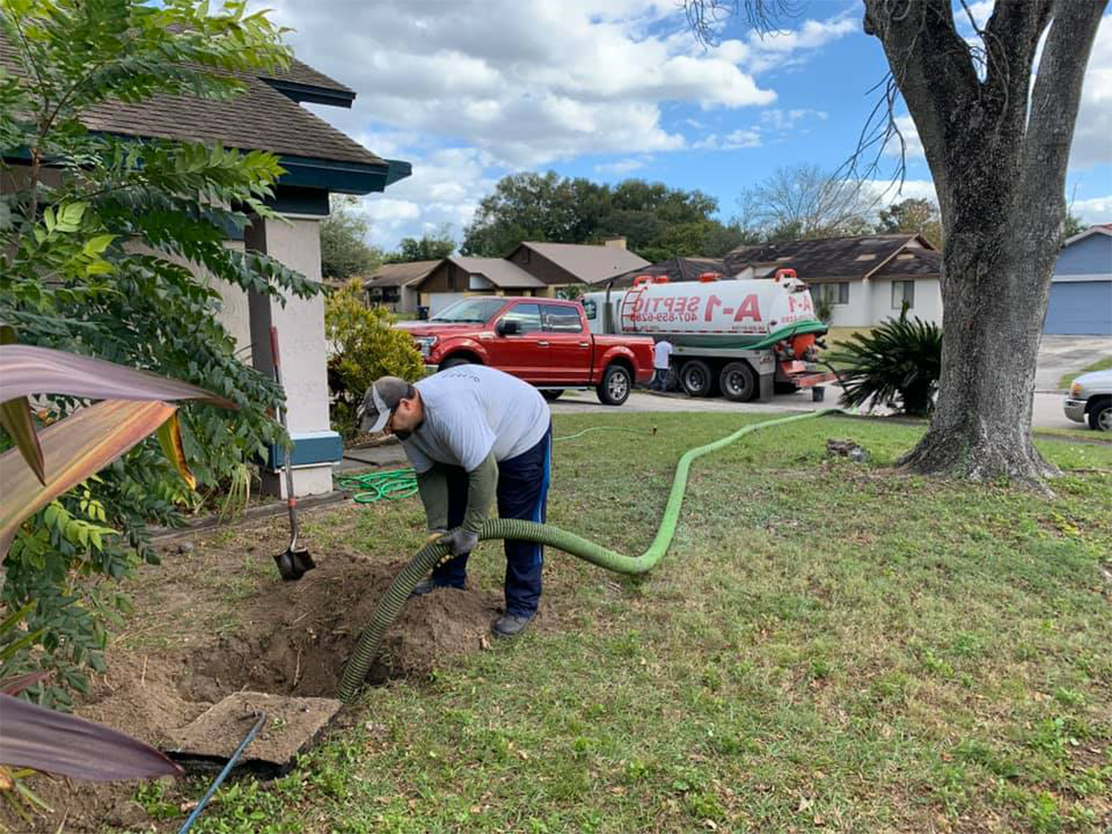
To locate buried lines on a multi-acre lot, technicians use probes, electronic locators, and sometimes dye tests to map out where the old system runs before starting a drain field repair in Geneva. Without accurate tracing, crews risk damaging working lines or placing new ones too close to existing infrastructure.
Older systems don't always have as-built drawings, so physical inspection becomes the primary tool. A probe rod pushed into the ground at regular intervals hits the gravel bed surrounding each line. Once the crew identifies the trench edges, they mark the layout with flags or paint. Electronic pipe locators work when the lines contain tracer wire, but many older Geneva installations lack that feature.
Dye testing helps confirm which lines still carry flow and which have failed. The crew flushes colored dye through the system and watches where it surfaces. If dye appears in the yard or pools near a specific trench, that line has lost its absorption capacity. This step prevents unnecessary replacement of sections that still function and focuses the work on the problem areas.
Why Line Placement Matters More Than Length Alone
A drain field can have 500 feet of pipe and still fail if the lines sit in the wrong spots. Placement affects how well the soil absorbs wastewater, how long the system lasts, and whether replacement becomes a recurring expense. Installers consider elevation, groundwater depth, and separation distances when laying out new lines.
Lines placed too close to the water table stay saturated year-round and never properly treat effluent. Most codes require a minimum vertical separation to the seasonal high water table, which varies based on soil and system type. On properties with low-lying areas, this might mean building up the field with fill material or moving the lines to higher ground during replacement.
Slope also matters. Lines installed on the ground that's too steep drain unevenly, with all the flow concentrating at the downhill end. Ground that's too flat doesn't move effluent through the system, which causes ponding and early failure. The ideal slope runs between one and three percent. When replacing lines, crews grade the trenches to match that range, even if it means adjusting the entire field layout.
Replacing Lines Without Disturbing Established Yards
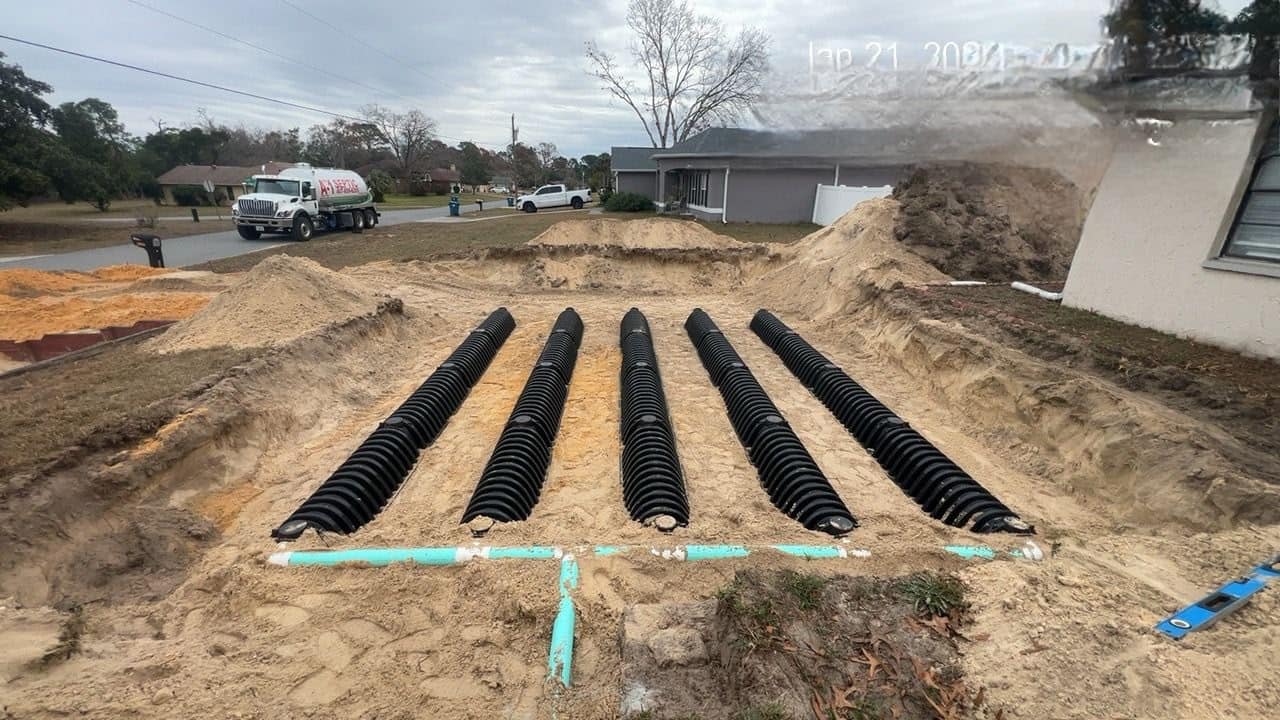
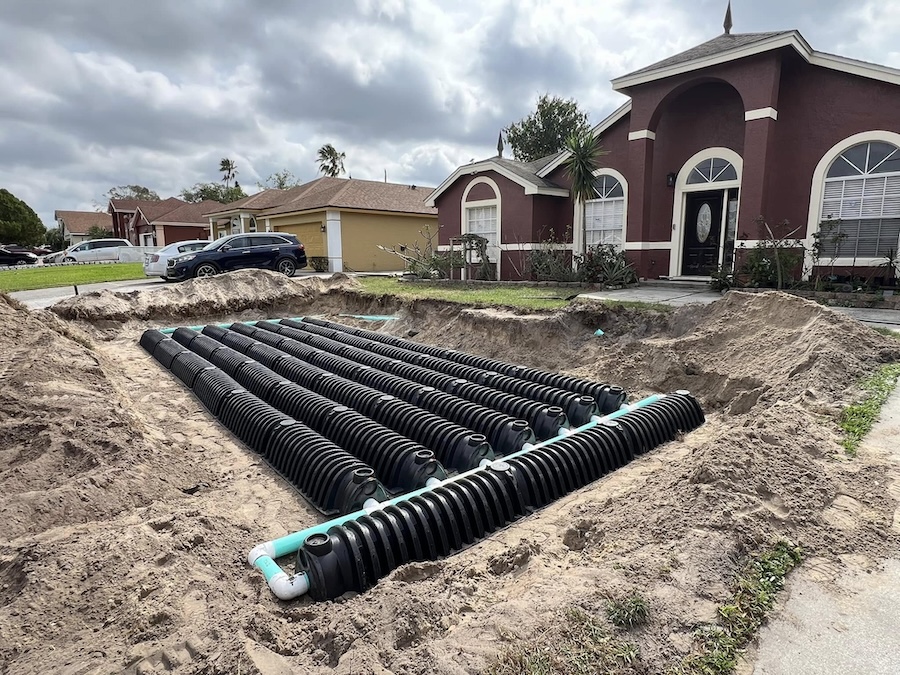
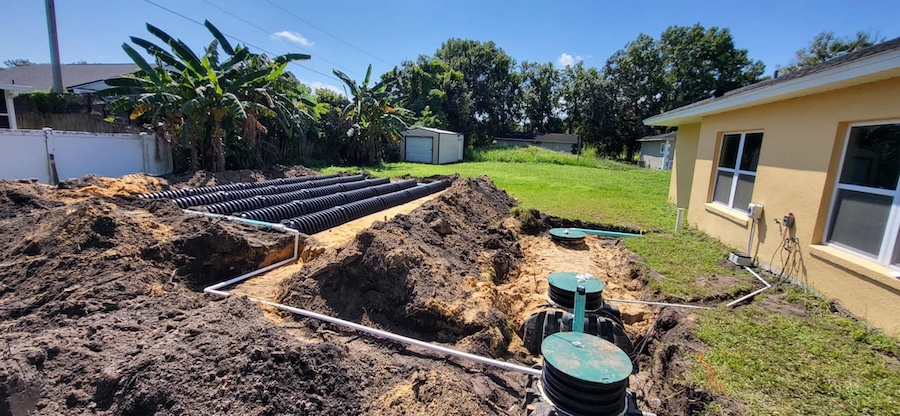
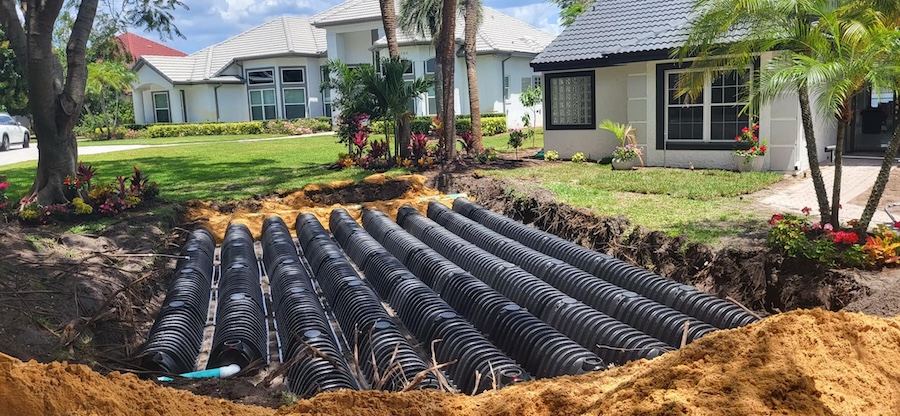
Geneva homeowners don't want replacement work to destroy mature landscaping or turn the yard into a construction zone for weeks. Careful planning and the right equipment minimize disruption while still delivering a functional system. Installers can work around trees, gardens, and hardscaping if they map everything before the excavator arrives.
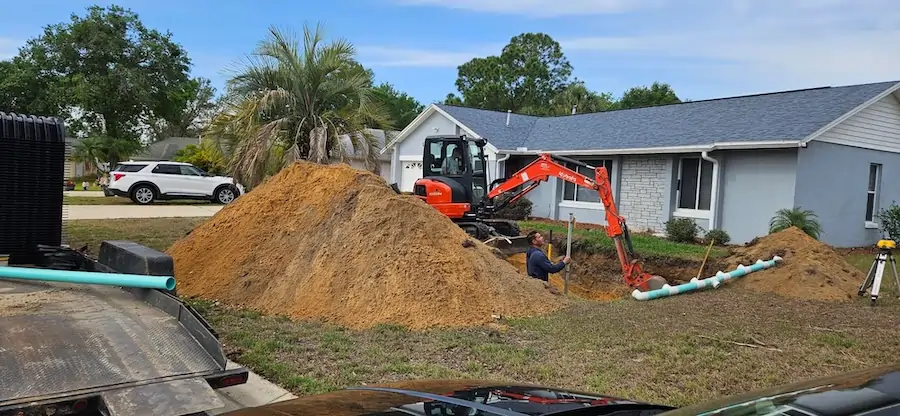
Compact excavators fit into tighter spaces than full-size machines and cause less turf damage. If the new lines can be positioned in unused areas of the lot, the old field stays intact until the replacement is complete and tested. This keeps at least part of the system operational during construction.
Tree roots pose the biggest challenge. Roots grow into drain lines searching for water and nutrients, which is why most codes require ten-foot clearances between trees and absorption trenches. If you're replacing lines near established trees, the crew might need to hand-dig sections or reroute the field. Cutting major roots to install new lines can destabilize or kill the tree, so advance planning identifies conflicts before work starts.
How System Age Affects Replacement Decisions
A drain field that's 15 years old has different replacement needs than one that's 35 years old. Age determines whether partial repairs make sense or if the entire field needs to be redone. It also affects permit requirements and whether the new system must meet current code instead of being grandfathered under older standards.
Systems installed before 2000 might lack features like distribution boxes, flow leveling devices, or properly sized tanks. When replacing the drain lines on one of these older setups, inspectors sometimes require upgrades to the entire system. That can add costs, but it also extends the life of the new field by ensuring balanced flow and adequate pretreatment. A new drain field line installation in Geneva on a 40-year-old system will probably trigger these updates.
Partial replacement works when only one section of the field has failed, and the rest still percolates fine. If the system is under 20 years old and soil tests show the unfailed areas remain functional, replacing just the problem lines saves money and leaves the yard mostly undisturbed. Most professionals recommend full replacement if the entire field is nearing the end of its service life.
What Proper Testing Looks Like After New Lines Are Installed
Installing new lines is only half the job. Testing confirms the system works before the crew backfills the trenches and restores the yard. Proper testing catches installation errors, verifies drain capacity, and documents performance.
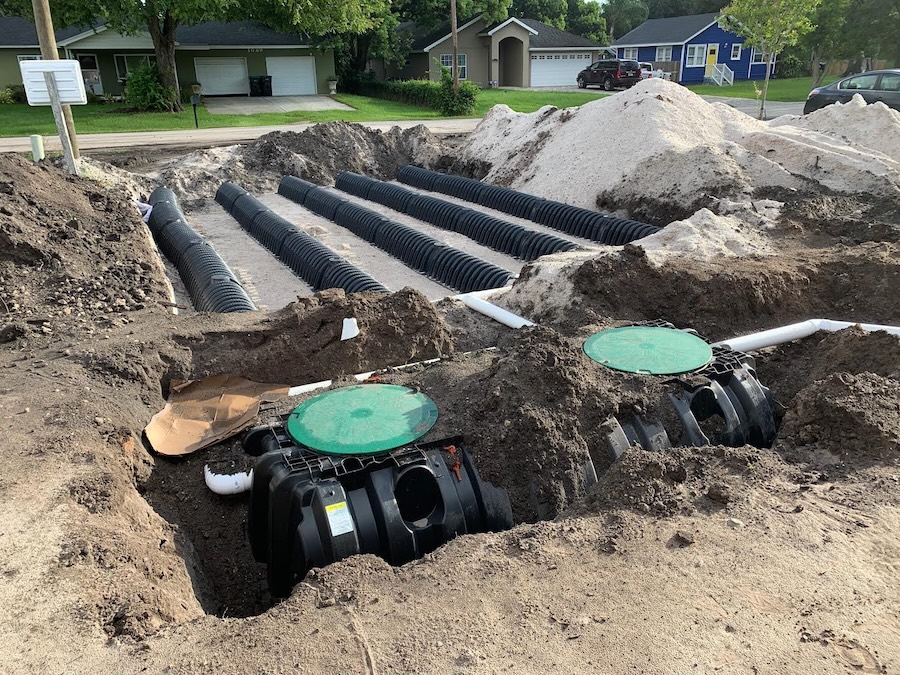
A basic flow test runs water through the system at the design rate and checks for even distribution across all of the lines. Technicians look for dry spots that indicate blockages or low spots where effluent pools instead of absorbing. They also verify that the distribution box sends equal volumes to each lateral line. Uneven flow shortens field life by overloading some sections while underusing others.
Percolation verification measures how quickly water moves through the soil around the new lines. This isn't the same as the initial perc test done before design. Post-installation testing confirms that the soil wasn't compacted during construction and that the gravel bed allows proper drainage. If the measured rate falls below the design assumption, the crew might need to add more aggregate or expand the field area before finishing the job.
Get Your Drain Field Working Right
Waiting too long to fix drain field problems turns a manageable partial replacement into a full system overhaul. A1 Septic can take care of every step of drain field repair in Geneva, from initial testing to final inspection. We map your property, test your soil, and install lines that match your lot's conditions. You get a system designed for your ground, not a generic layout that might fail in five years. Contact us today to schedule an evaluation and see what your property needs.